

Table of contents
- The Hidden Costs of Fake It Till You Make It Networking
- The Science Behind Authentic Networking
- The Authentic Networking Alternative
- Real-World Success Stories
- Getting Started: 5 Ways to Network More Authentically Today
- The Path Forward: Embracing Your Authentic Professional Self
- Transform Your Professional Relationships Today
“Just put yourself out there!” “Be more confident!” “Fake it till you make it!” If you’re an introvert, you’ve probably heard this networking advice countless times. Here’s the truth: this guidance isn’t just unhelpful—it’s actively harmful for introverts trying to build meaningful professional relationships.
The most common networking advice is actually designed for extroverts. When introverts try to follow these conventional strategies, they often end up exhausted, inauthentic, and struggling to maintain connections. What if there was a better way? What if authentic networking could actually be more effective than putting on a performance?
This article explores why the “fake it till you make it” approach fails introverts and reveals genuine networking strategies that work with your natural strengths, not against them.
The Hidden Costs of Fake It Till You Make It Networking
Energy Drain from Maintaining a False Persona

When introverts try to fake it till you make it networking, they’re essentially role-playing an extroverted character. This requires enormous mental energy. You’re not just having conversations—you’re simultaneously monitoring your performance, adjusting your personality, and maintaining a façade that feels foreign.
This energy expenditure is unsustainable. Research shows that introverts process social interactions differently than extroverts. Their brains are wired for deeper processing, which means they naturally prefer quality over quantity in relationships. When forced to maintain a false persona, this processing becomes even more taxing.
Consider Sarah, a software developer who spent two years forcing herself to attend large networking events. She would psyche herself up beforehand, adopt an overly enthusiastic personality, and work the room like she thought successful networkers should. The result? She was exhausted for days after each event and struggled to follow up with contacts because she couldn’t maintain the energy required to be that version of herself.
Unsustainable Long-Term Relationships
Authentic networking creates lasting connections because people get to know the real you. When you fake it till you make it, you’re building relationships on a foundation of performance rather than genuine connection. This creates several problems:
Mismatched expectations: People expect you to maintain the personality you presented initially. When you can’t sustain this energy long-term, relationships often fade or become awkward.
Shallow connections: Surface-level interactions rarely lead to meaningful professional relationships. Without authenticity, conversations remain transactional rather than transformational.
Difficulty with follow-up: If you were performing during your initial meeting, how do you maintain that same energy in ongoing communications? Most introverts find this impossible, leading to dropped connections.
Misalignment with Introvert Values
Introverts typically value depth, authenticity, and meaningful connection. The fake it till you make it approach contradicts these core values. This misalignment creates internal conflict and makes networking feel like a betrayal of your authentic self.
When your networking approach conflicts with your values, it becomes a source of stress rather than growth. You’re not just fighting external challenges—you’re fighting against your own nature. This internal resistance makes every networking interaction feel like an uphill battle.
The Science Behind Authentic Networking
Research on Genuine vs. Performed Social Interactions
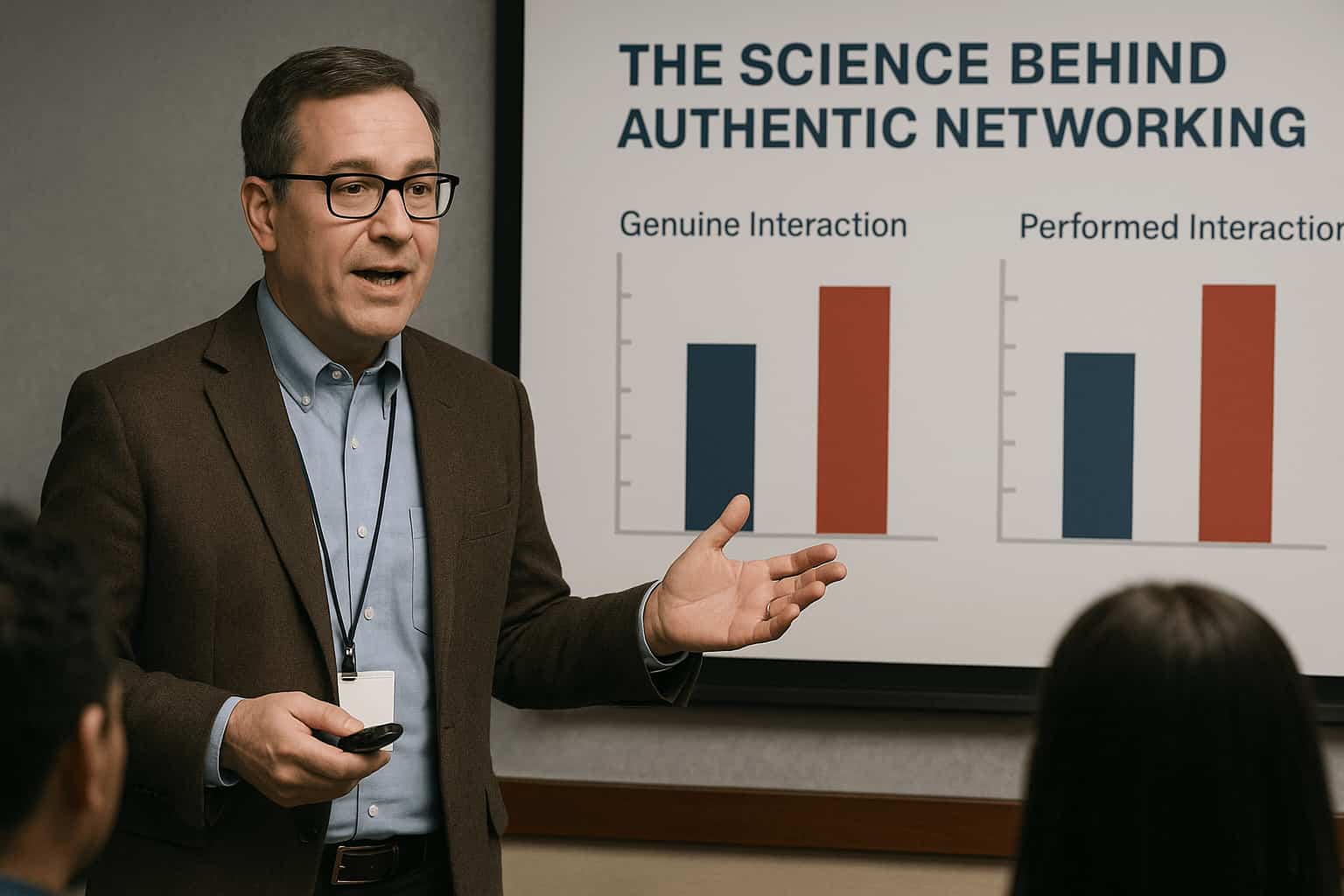
Scientific research consistently shows that authentic interactions create stronger, more lasting connections than performed ones. A study published in the Journal of Personality and Social Psychology found that people who engaged authentically in social situations reported higher satisfaction and formed more meaningful relationships.
The research reveals something particularly relevant for introverts: quality trumps quantity every time. Authentic networking naturally leads to fewer but deeper connections—exactly what introverts prefer and excel at maintaining.
Neurological studies also show that introverts’ brains are more sensitive to dopamine stimulation. This means they’re naturally less motivated by external rewards (like collecting business cards) and more motivated by internal satisfaction (like meaningful conversations). Authentic networking aligns perfectly with this neurological reality.
Why Authenticity Creates Stronger Professional Relationships
Genuine networking strategies work because they’re based on real value exchange rather than performative interactions. When you show up as your authentic self, several things happen:
Trust builds faster: People can sense authenticity, even subconsciously. When you’re genuine, others feel safe to be genuine too, creating a foundation of mutual trust.
Conversations go deeper: Without the energy drain of maintaining a persona, you can focus on actual conversation content. This leads to more substantive discussions that people remember.
Follow-up feels natural: When interactions are authentic, continuing the relationship feels organic rather than forced. You’re not trying to remember which version of yourself you presented.
Mutual value becomes clear: Authentic networking focuses on how you can help others and how they can help you. This creates reciprocal relationships rather than one-sided pitches.
The Authentic Networking Alternative
Leveraging Natural Introvert Strengths
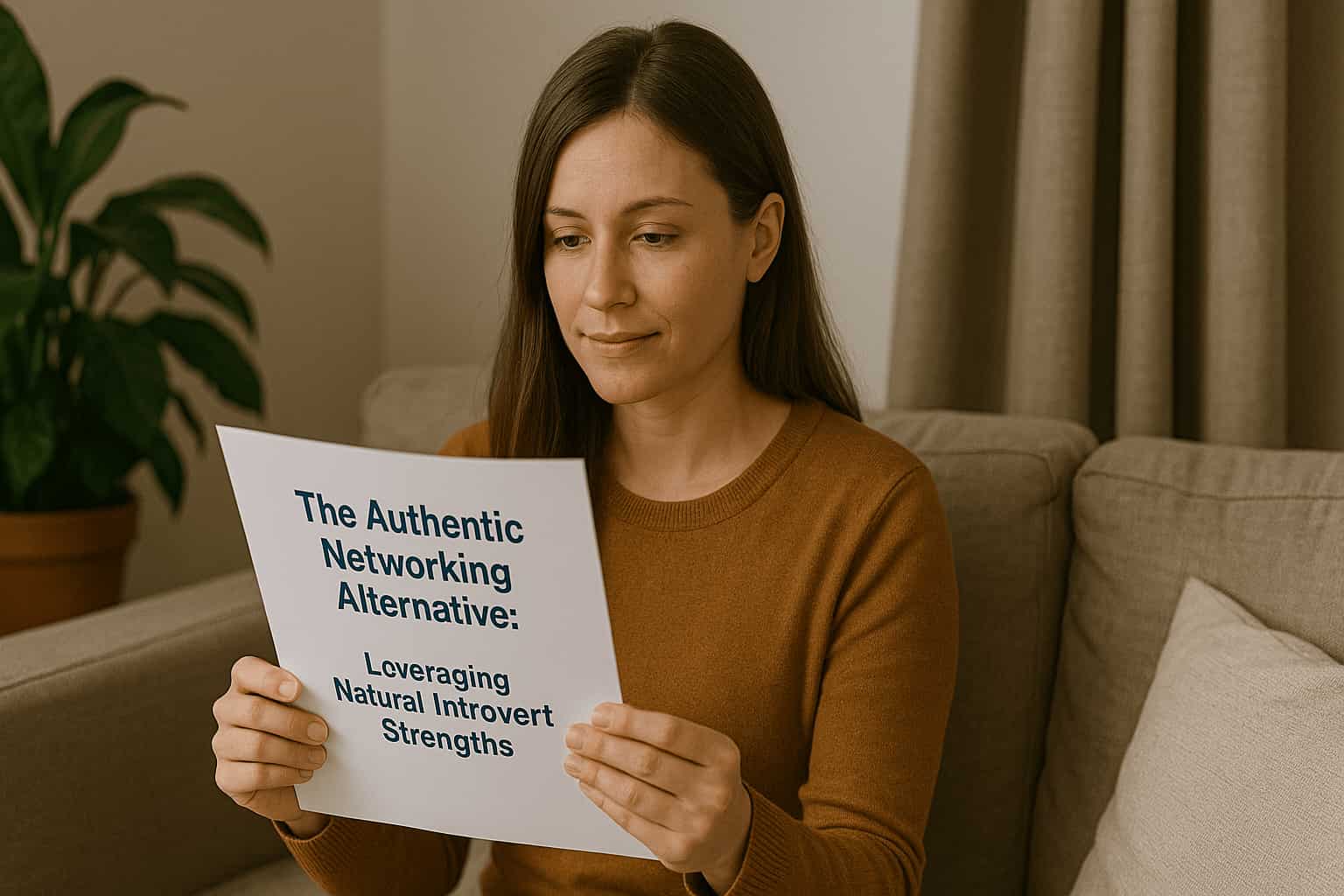
Instead of fighting against your introvert nature, authentic networking embraces it. Introverts possess several natural advantages that make them excellent networkers when they use the right approach:
Deep listening skills: Introverts are naturally good listeners. In networking, this translates to making others feel heard and valued—a rare gift in our noisy world.
Thoughtful communication: Introverts typically think before speaking, leading to more meaningful contributions to conversations. Quality over quantity applies to words as well as relationships.
Genuine curiosity: Many introverts are naturally curious about others’ experiences and perspectives. This curiosity drives authentic conversations that people remember.
Preference for one-on-one interactions: While others are working the room, introverts can focus on building one meaningful connection at a time.
Building Relationships Through Genuine Value Creation
Authentic networking for introverts focuses on creating real value for others rather than collecting contacts. This approach feels more natural and produces better results:
Research before events: Instead of planning to meet everyone, research attendees and identify 2-3 people you’d genuinely like to connect with. This gives you conversation starters and reduces the pressure to work the room.
Focus on helping others: Ask yourself how you can help each person you meet. This shifts focus from self-promotion to service, making interactions more comfortable and valuable.
Follow your energy: Pay attention to which conversations energize you versus drain you. Authentic networking means spending more time with connections that feel natural and mutually beneficial.
Use your expertise: Share your knowledge and insights when relevant. Introverts often have deep expertise in their fields—this is valuable to others and feels natural to share.
Sustainable Approaches That Feel Natural
Sustainable authentic networking requires strategies that work with your energy patterns rather than against them:
Choose smaller events: Instead of large conferences, seek out smaller gatherings, workshops, or industry meetups where deeper conversations are possible.
Prepare conversation starters: Having a few genuine questions ready reduces social anxiety and ensures conversations go beyond small talk.
Schedule recovery time: Plan downtime after networking events to recharge. This prevents burnout and keeps networking sustainable long-term.
Leverage online platforms: Use LinkedIn, Twitter, or industry forums to start conversations before meeting in person. This allows for the thoughtful communication style introverts prefer.
Partner with an extrovert: If you must attend large events, partner with an extroverted colleague who can make initial introductions, allowing you to focus on deeper conversations.
Real-World Success Stories
Case Study 1: The Thoughtful Consultant

Mark, a management consultant, struggled with traditional networking for years. He would force himself to attend industry conferences, hand out business cards, and try to meet as many people as possible. Despite his efforts, he rarely got follow-up meetings or referrals.
Everything changed when Mark embraced authentic networking. Instead of trying to meet everyone, he began:
- Researching speakers and attendees beforehand
- Preparing thoughtful questions about their work
- Focusing on 2-3 meaningful conversations per event
- Following up with personalized messages referencing specific conversation points
Within six months, Mark had built a network of genuine professional relationships. His referral rate increased by 300% because people remembered their substantive conversations with him. More importantly, networking no longer felt like a chore—it became an opportunity for genuine learning and connection.
Case Study 2: The Authentic Entrepreneur
Lisa, an introverted startup founder, initially tried to model herself after extroverted entrepreneurs she admired. She attended pitch events, startup mixers, and networking happy hours, forcing herself to be outgoing and energetic.
The approach backfired. Lisa was exhausted, and her networking efforts weren’t translating into business results. She decided to try a different approach:
- She joined smaller, industry-specific mastermind groups
- She focused on building relationships with potential partners rather than trying to pitch everyone
- She leveraged her expertise by speaking at smaller events and hosting intimate roundtables
- She used email and one-on-one coffee meetings for deeper business discussions
This authentic networking approach led to her most successful business partnerships and eventually to securing series A funding through a warm introduction from her network.
Getting Started: 5 Ways to Network More Authentically Today
1. Identify Your Natural Networking Style

Before your next networking opportunity, take time to identify what feels authentic to you:
- Do you prefer one-on-one conversations or small groups?
- Are you more comfortable online or in-person?
- What topics energize you in professional conversations?
- When do you feel most confident sharing your expertise?
Understanding your natural style helps you choose networking opportunities that align with your strengths.
2. Prepare Genuine Questions
Develop a toolkit of authentic questions that spark meaningful conversations:
- “What’s the most interesting project you’re working on right now?”
- “What trends are you seeing in your industry?”
- “What’s one thing you wish more people understood about your work?”
- “What’s been the most valuable learning experience in your career?”
These questions go beyond surface-level small talk and invite deeper sharing.
3. Focus on Quality Metrics
Instead of counting business cards or LinkedIn connections, track meaningful interactions:
- How many substantive conversations did you have?
- Did you learn something valuable from each interaction?
- Were you able to help someone with their challenge?
- Do you have a clear next step for following up?
Quality metrics align with introvert values and lead to better long-term results.
4. Create Value First
Shift your mindset from “What can I get?” to “What can I give?”:
- Share relevant articles with new connections
- Make introductions between people who should know each other
- Offer your expertise to help solve someone’s problem
- Provide honest feedback when asked
Value creation feels natural to introverts and builds stronger relationships.
5. Design Your Ideal Follow-Up Process
Create a follow-up system that feels authentic and sustainable:
- Send personalized messages within 24-48 hours
- Reference specific conversation points from your interaction
- Offer something valuable (article, introduction, resource)
- Suggest a specific next step if appropriate
Consistent, thoughtful follow-up is where authentic networking really pays off.
The Path Forward: Embracing Your Authentic Professional Self

Authentic networking isn’t about becoming someone different—it’s about becoming more yourself. When you stop trying to fake it till you make it and start leveraging your natural strengths, networking transforms from a dreaded obligation into a genuine opportunity for connection and growth.
The key is recognizing that your introvert nature isn’t a networking disadvantage to overcome—it’s a competitive advantage to embrace. Your ability to listen deeply, think thoughtfully, and build meaningful relationships is exactly what the professional world needs.
Genuine networking strategies work because they’re sustainable. You can maintain authentic relationships over time because they’re built on who you really are, not who you think you should be. This creates a professional network that actually supports your career goals rather than draining your energy.
Remember, the most successful networkers aren’t necessarily the most outgoing—they’re the most authentic. When you show up as your real self, you attract the right opportunities and build relationships that truly matter.
Transform Your Professional Relationships Today
If you’re ready to abandon the exhausting “fake it till you make it” approach and discover authentic networking strategies that actually work for introverts, you’re not alone. Thousands of professionals have transformed their careers by learning to network in alignment with their natural strengths.
The strategies outlined in this article are just the beginning. For the complete framework that will revolutionize your professional relationships, dive deeper into the comprehensive system outlined in “Introvert Energy: The Introvert’s Guide to Networking.“
This isn’t another generic networking book filled with extroverted advice. It’s a complete roadmap designed specifically for introverts who want to build meaningful professional relationships without compromising their authentic selves. You’ll discover advanced strategies for energy management, conversation frameworks that feel natural, and systems for maintaining relationships that don’t drain your social battery.
Your introvert nature is your networking superpower. It’s time to start using it. Get “Introvert Energy” today and transform your professional relationships from the inside out.

