

Table of contents
- The Follow-Up Problem: Why Most Networking Follow-Up Fails
- The Introvert’s Follow-Up Advantage: Playing to Your Strengths
- The 24-48-7 Follow-Up System: Your Strategic Framework
- Follow-Up Templates That Work: Your Communication Toolkit
- Long-Term Relationship Building: Staying Connected Without Being Annoying
- Case Studies: Networking Follow-Up Success Stories
- Advanced Follow-Up Strategies for Introverts
- Overcoming Common Follow-Up Challenges for Introverts
- Building Your Personal Follow-Up System
- Measuring Follow-Up Success
- The Long-Term Impact of Strategic Follow-Up
- Conclusion: Your Path to Networking Follow-Up Success
The fortune is in the follow-up – but only if you do it right.
You’ve survived the networking event. You’ve had meaningful conversations and exchanged business cards. Now comes the part that makes most introverts want to hide under their desks: the follow-up.
If you’re like most introverts, you probably have a collection of business cards sitting on your desk, staring at you accusingly. You know you should reach out, but you’re paralyzed by questions. When should you contact them? What should you say? How do you follow up without seeming desperate or pushy?
The good news is that networking follow-up for introverts can actually be your secret weapon. While extroverts might rely on charm and frequent touchpoints, introverts excel at thoughtful, personalized communication that builds genuine relationships over time.
The Follow-Up Problem: Why Most Networking Follow-Up Fails

Most networking advice treats follow-up like a numbers game. Send generic emails to everyone you met. Schedule coffee meetings with anyone who’ll agree. Follow up within 24 hours or the connection is dead.
This approach fails spectacularly for introverts for several reasons:
Energy Drain: Mass follow-up emails and constant coffee meetings exhaust your social energy reserves. You burn out before building meaningful relationships.
Authenticity Issues: Generic templates feel fake and impersonal. Introverts value authentic communication, and cookie-cutter approaches clash with your natural communication style.
Overwhelm Factor: Trying to follow up with everyone creates an overwhelming task list. You procrastinate until the window for meaningful connection has passed.
Pushy Perception: Aggressive follow-up tactics make you feel like a salesperson rather than a professional building relationships. This discomfort shows in your communication.
The traditional follow-up model was designed for extroverts who thrive on frequent social interaction. Introverts need professional follow-up strategies that align with their natural strengths and energy patterns.
The Cost of Poor Follow-Up
When introverts avoid follow-up or do it poorly, they miss incredible opportunities:
- Potential mentors who could accelerate career growth
- Collaboration partners who share complementary skills
- Job opportunities that never get mentioned
- Industry insights that could inform better decisions
- Professional relationships that could provide ongoing support
Research shows that 80% of networking value comes from follow-up and relationship maintenance, not the initial meeting. Your networking relationship maintenance skills determine whether those business cards become meaningful connections or desk clutter.
The Introvert’s Follow-Up Advantage: Playing to Your Strengths

Instead of fighting your introvert nature, leverage it for better follow-up results. Introverts have natural advantages in networking relationship maintenance that extroverts often lack.
Thoughtful, Personalized Communication
While extroverts might send quick, casual follow-ups, introverts excel at thoughtful, personalized messages. You naturally reflect on conversations and remember meaningful details that others miss.
This attention to detail creates follow-up messages that stand out. When you reference a specific point from your conversation or share a resource related to their interests, you demonstrate genuine engagement that busy professionals appreciate.
Value-Focused Rather Than Ask-Focused
Introverts typically feel uncomfortable making direct asks, especially with new connections. This apparent weakness is actually a strength in networking follow-up for introverts.
By focusing on providing value first, you build trust and goodwill. People remember those who help them, not those who immediately ask for favors. Your natural inclination to give before receiving aligns perfectly with effective relationship building.
Consistent, Reliable Relationship Maintenance
While extroverts might have intense bursts of networking activity followed by periods of neglect, introverts tend toward consistent, steady relationship maintenance. You prefer regular, meaningful touchpoints over frequent, superficial contact.
This consistency builds stronger professional relationships over time. People know they can count on you to stay in touch and provide ongoing value, making you a trusted part of their professional network.
Deep Listening Advantage
Your natural listening skills give you rich material for follow-up conversations. While others might struggle to remember what they discussed, you retain details about people’s goals, challenges, and interests.
This deep listening translates into follow-up messages that feel relevant and personal. You can continue conversations naturally rather than starting from scratch each time.
The 24-48-7 Follow-Up System: Your Strategic Framework

Effective networking follow-up for introverts requires a systematic approach that respects your energy while building strong relationships. The 24-48-7 system provides a clear framework that eliminates guesswork and reduces overwhelm.
24 Hours: Thank You and Connection Confirmation
Within 24 hours of meeting someone, send a brief thank-you message that confirms the connection and sets the foundation for future relationship building.
Your goals for the 24-hour follow-up:
- Thank them for their time and conversation
- Reference a specific point from your discussion
- Confirm any commitments you made during the conversation
- Connect on LinkedIn with a personalized message
Example 24-hour follow-up: “Hi Sarah, Thank you for the engaging conversation about content marketing at yesterday’s conference. Your insights about video storytelling were particularly valuable. As promised, I’m connecting with you on LinkedIn. I look forward to staying in touch.”
Keep this message brief and professional. You’re not trying to continue the conversation yet – you’re simply confirming the connection and showing appreciation.
48 Hours: Value-Added Follow-Up with Resources

The 48-hour follow-up is where networking follow-up for introverts really shines. This is your opportunity to provide immediate value while demonstrating your expertise and reliability.
Your goals for the 48-hour follow-up:
- Share a relevant resource related to your conversation
- Demonstrate your expertise and helpfulness
- Give them a reason to remember you positively
- Open the door for future communication
Types of value-added follow-up:
- Industry articles or reports related to their interests
- Introductions to people who could help them
- Tools or resources that solve problems they mentioned
- Relevant podcast episodes or videos
- Invitations to events they might find valuable
Example 48-hour follow-up: “Hi Mark, I’ve been thinking about your question regarding employee engagement metrics. I came across this Harvard Business Review article on measuring engagement ROI that directly addresses your concerns. The framework they outline might be helpful for your Q4 planning. Hope you find it valuable!”
This approach positions you as a helpful resource rather than someone seeking immediate benefits. People remember those who provide value without expecting anything in return.
7 Days: Relationship Development and Next Steps
The seven-day follow-up focuses on relationship development and establishing ongoing connection. This is where you can explore collaboration opportunities or suggest next steps for building the relationship.
Your goals for the 7-day follow-up:
- Explore potential collaboration opportunities
- Suggest concrete next steps for relationship building
- Offer specific ways you can help them
- Propose low-pressure ways to stay connected
Professional follow-up strategies for the 7-day touchpoint:
- Suggest a brief coffee meeting or phone call
- Offer to introduce them to someone in your network
- Invite them to a relevant event or webinar
- Propose a specific collaboration project
- Ask for their advice on a relevant challenge
Example 7-day follow-up: “Hi Jennifer, I hope your presentation went well last week. I’ve been reflecting on your expansion plans, and I think you might benefit from connecting with David Chen, our former head of international sales. He successfully launched similar initiatives in three different markets. Would you be interested in a brief introduction?”
This message shows you’ve been thinking about their challenges and offers concrete help. It also suggests a natural next step that benefits them.
Follow-Up Templates That Work: Your Communication Toolkit

Effective networking relationship maintenance requires consistent, high-quality communication. These templates provide starting points that you can customize based on your personality and the specific relationship.
Thank You Messages That Stand Out
Template 1: The Specific Reference “Hi [Name], Thank you for the insightful conversation about [specific topic] at [event]. Your perspective on [particular point] gave me a fresh way to think about [related challenge]. I appreciate you taking the time to share your experience with [specific situation]. Looking forward to staying connected.”
Template 2: The Commitment Confirmation “Hi [Name], It was great meeting you at [event] yesterday. As promised, I’m sending you the [resource/contact/information] we discussed. [Brief description of what you’re sharing and why it’s relevant]. Thank you for the engaging conversation about [topic]. I’d love to continue our discussion sometime soon.”
Template 3: The Mutual Interest “Hi [Name], I really enjoyed our conversation about [shared interest/challenge] at [event]. It’s refreshing to meet someone who understands [specific aspect]. I found your approach to [particular topic] particularly interesting. I hope we can explore this topic further in the future.”
Value-Added Follow-Up Emails
Template 1: The Resource Share “Hi [Name], I came across this [article/report/tool] about [relevant topic] and immediately thought of our conversation about [specific challenge]. The author’s insights on [particular aspect] align perfectly with what you mentioned about [their situation]. I thought you might find it valuable for [specific application]. Hope this helps!”
Template 2: The Introduction Offer “Hi [Name], I’ve been thinking about your question regarding [specific challenge/goal]. I know someone who might be able to help – [contact name] is [brief description of their expertise] and has experience with [relevant area]. Would you be interested in a brief introduction? I think you two would have a lot to discuss.”
Template 3: The Insight Share “Hi [Name], Your comment about [specific topic] at [event] has stuck with me. I recently read about [relevant development/trend] that might impact [their area of interest]. [Brief summary of the insight and its relevance]. Thought you might find this perspective interesting given your work in [their field].”
Relationship Maintenance Communications
Template 1: The Quarterly Check-In “Hi [Name], I hope you’re doing well. I was just thinking about our conversation regarding [previous topic] and wondered how [specific project/goal] is progressing. I saw that [relevant news/achievement] – congratulations! If there’s anything I can help with as you [their current focus], please don’t hesitate to reach out.”
Template 2: The Achievement Celebration “Hi [Name], I saw the news about [their achievement/company news] and wanted to congratulate you! Given what you shared about [related goal/challenge], this must be particularly satisfying. Your approach to [relevant strategy] clearly paid off. Well done!”
Template 3: The Helpful Update “Hi [Name], I hope you’re well. I wanted to share a quick update on [relevant development] that might impact [their area of interest]. [Brief description of update and its relevance]. Also, I’m curious how [previous topic of conversation] is developing. Would love to hear an update when you have a moment.”
Long-Term Relationship Building: Staying Connected Without Being Annoying

The key to successful networking relationship maintenance is consistency without overwhelming your contacts. Professional follow-up strategies must balance staying top-of-mind with respecting people’s time and attention.
The Relationship Temperature System
Not all professional relationships require the same level of maintenance. Use this system to determine appropriate follow-up frequency:
Hot Relationships (Monthly contact): Close collaborators, mentors, and inner circle connections who directly impact your current work or career goals.
Warm Relationships (Quarterly contact): Industry contacts, potential collaborators, and professional friends who provide ongoing value and support.
Cool Relationships (Bi-annual contact): Broader network contacts, former colleagues, and connections who might become more relevant in the future.
This system prevents relationship maintenance from becoming overwhelming while ensuring you stay connected with your most important contacts.
Value-First Relationship Maintenance
Every interaction with your network should provide value. This doesn’t mean you can never ask for help, but your default mode should be giving rather than taking.
Ways to provide ongoing value:
- Share relevant industry insights and trends
- Make strategic introductions between your contacts
- Offer your expertise for their projects or challenges
- Celebrate their achievements and milestones
- Provide feedback and advice in your area of expertise
Example of value-first maintenance: Lisa, a marketing director, maintains her network by sending a monthly newsletter featuring industry trends, tool recommendations, and job opportunities. This approach keeps her top-of-mind while providing genuine value to her contacts.
The Natural Touch Point Strategy

Instead of forced check-ins, look for natural reasons to reconnect with your network:
Industry Events: Reach out before conferences to suggest meeting up, or follow up after events to continue conversations.
Career Changes: Job transitions, promotions, or company changes provide natural opportunities to reconnect and offer support.
Shared Interests: Articles, podcasts, or news related to topics you’ve discussed create organic reasons to reach out.
Mutual Connections: When you meet someone who knows one of your contacts, it’s natural to mention this connection and reconnect.
Seasonal Touchpoints: Holiday greetings, year-end reflections, or quarterly industry updates provide structured opportunities for outreach.
Case Studies: Networking Follow-Up Success Stories
Case Study 1: The Thoughtful Consultant
Rachel, an independent consultant, met David, a potential client, at a small industry gathering. Instead of immediately pitching her services, she focused on understanding his challenges with team communication.
Her follow-up strategy:
- 24 hours: Thank you note referencing their discussion about remote team dynamics
- 48 hours: Shared a relevant case study about communication tools for distributed teams
- 7 days: Offered to introduce him to a former client who had solved similar challenges
- 30 days: Sent an article about team building techniques, with a brief note about his upcoming team retreat
Three months later, David reached out when he needed consulting help. Rachel’s patient, value-focused approach had built trust and positioned her as a helpful resource rather than a pushy salesperson.
Case Study 2: The Strategic Job Seeker
Marcus, a software engineer looking to transition into product management, met Elena, a product director, at a tech meetup. His networking follow-up for introverts approach helped him build a meaningful professional relationship.
His follow-up strategy:
- 24 hours: LinkedIn connection with a note about their conversation regarding product roadmap challenges
- 48 hours: Shared a technical blog post he’d written that addressed one of the development challenges she mentioned
- 7 days: Offered to beta test a product feature her team was developing
- Monthly: Sent relevant industry articles and asked thoughtful questions about product strategy
Over six months, Marcus built a genuine professional relationship with Elena. When a product management position opened on her team, she thought of him immediately and encouraged him to apply. His thoughtful follow-up had demonstrated his product thinking and reliability.
Advanced Follow-Up Strategies for Introverts
The Content-Based Approach
Create valuable content that naturally keeps you connected with your network. This approach aligns perfectly with introvert strengths:
Monthly Industry Roundups: Curate relevant articles, trends, and insights for your network. This provides consistent value while maintaining regular contact.
Skill-Sharing Content: Write blog posts, create videos, or share insights about your expertise. This positions you as a valuable resource while giving you natural reasons to reach out.
Event Summaries: After attending conferences or workshops, share key takeaways with your network. This demonstrates your commitment to professional development while providing value.
The Collaborative Connection Method

Instead of one-way communication, create opportunities for collaborative interaction:
Industry Discussions: Start conversations about industry trends or challenges in LinkedIn groups or professional forums. This creates natural opportunities for follow-up.
Peer Learning Groups: Organize small groups focused on specific topics or challenges. This provides structured opportunities for relationship building.
Resource Sharing Networks: Create informal groups where professionals share tools, articles, and opportunities. This facilitates ongoing relationship maintenance.
The Seasonal Relationship Review
Implement quarterly relationship reviews to ensure your networking follow-up for introverts remains strategic and effective:
Quarterly Audit: Review your network contacts and assess relationship temperature. Identify connections that need attention or could benefit from deeper engagement.
Value Assessment: Evaluate what value you’ve provided to your network and look for new ways to help your contacts achieve their goals.
Opportunity Identification: Look for collaboration opportunities, introduction possibilities, or ways to deepen existing relationships.
System Optimization: Assess what’s working in your follow-up approach and what could be improved or streamlined.
Overcoming Common Follow-Up Challenges for Introverts
Challenge 1: Fear of Being Pushy
Solution: Focus on providing value rather than making asks. When you consistently help others, occasional requests feel natural rather than pushy.
Practical tip: For every ask you make, provide value in five other interactions. This 5:1 ratio ensures you’re always contributing more than you’re taking.
Challenge 2: Overwhelm from Too Many Connections
Solution: Be selective about who you follow up with. It’s better to build deep relationships with fewer people than superficial connections with many.
Practical tip: Use the “would I want to work with this person?” test. If the answer is no, polite acknowledgment is sufficient – deep follow-up isn’t necessary.
Challenge 3: Not Knowing What to Say
Solution: Keep notes about your conversations and use them for personalized follow-up. Reference specific points from your discussions to create natural conversation starters.
Practical tip: Immediately after networking events, write brief notes about each meaningful conversation. Include personal details, professional challenges, and potential ways to help.
Challenge 4: Timing Anxiety
Solution: Follow the 24-48-7 system consistently. Having a clear framework eliminates decision fatigue and ensures timely follow-up.
Practical tip: Set calendar reminders for each phase of follow-up. This systematic approach prevents important connections from falling through the cracks.
Building Your Personal Follow-Up System
Step 1: Contact Organization

Create a simple system for tracking your networking contacts:
Basic Information: Name, company, role, contact information, and where you met Conversation Notes: Key points from your discussions, their challenges, and interests Follow-Up History: Record of your interactions and planned next steps Relationship Temperature: Classification of how actively you should maintain this relationship
Step 2: Template Customization
Adapt the templates provided earlier to match your personality and communication style:
Voice and Tone: Adjust the language to sound natural when you write it Industry Specifics: Include terminology and references relevant to your field Personal Touches: Add elements that reflect your unique perspective and expertise
Step 3: Value Creation Plan
Identify ways you can consistently provide value to your network:
Content Sources: Industry publications, reports, and resources you regularly consume Expertise Areas: Topics where you can provide insights, advice, or assistance Network Connections: People in your network who might benefit from introductions Opportunities: Events, job openings, or collaboration possibilities you can share
Step 4: Maintenance Schedule
Create a sustainable schedule for relationship maintenance:
Daily: Respond to immediate follow-up needs and opportunities Weekly: Send value-added follow-ups and maintain active relationships Monthly: Review your network and reach out to warm relationships Quarterly: Conduct relationship audits and plan strategic outreach
Measuring Follow-Up Success
Relationship Quality Metrics

Track the depth and quality of your professional relationships:
Response Rates: How often do people respond to your follow-up messages? Engagement Level: Are people asking questions and continuing conversations? Reciprocal Value: Are your contacts sharing resources and opportunities with you? Relationship Progression: Are initial connections developing into meaningful professional relationships?
Opportunity Generation
Monitor how your networking relationship maintenance creates opportunities:
Collaboration Projects: How many professional collaborations have resulted from your follow-up efforts? Job Referrals: What career opportunities have come through your network? Business Development: How has your network contributed to business growth or client acquisition? Knowledge Sharing: What valuable insights have you gained through your professional relationships?
Personal Satisfaction
Assess whether your approach feels authentic and sustainable:
Energy Levels: Does your follow-up approach energize or drain you? Comfort Level: Do you feel authentic when communicating with your network? Consistency: Are you maintaining regular contact without feeling overwhelmed? Relationship Quality: Are you building the types of professional relationships you want?
The Long-Term Impact of Strategic Follow-Up
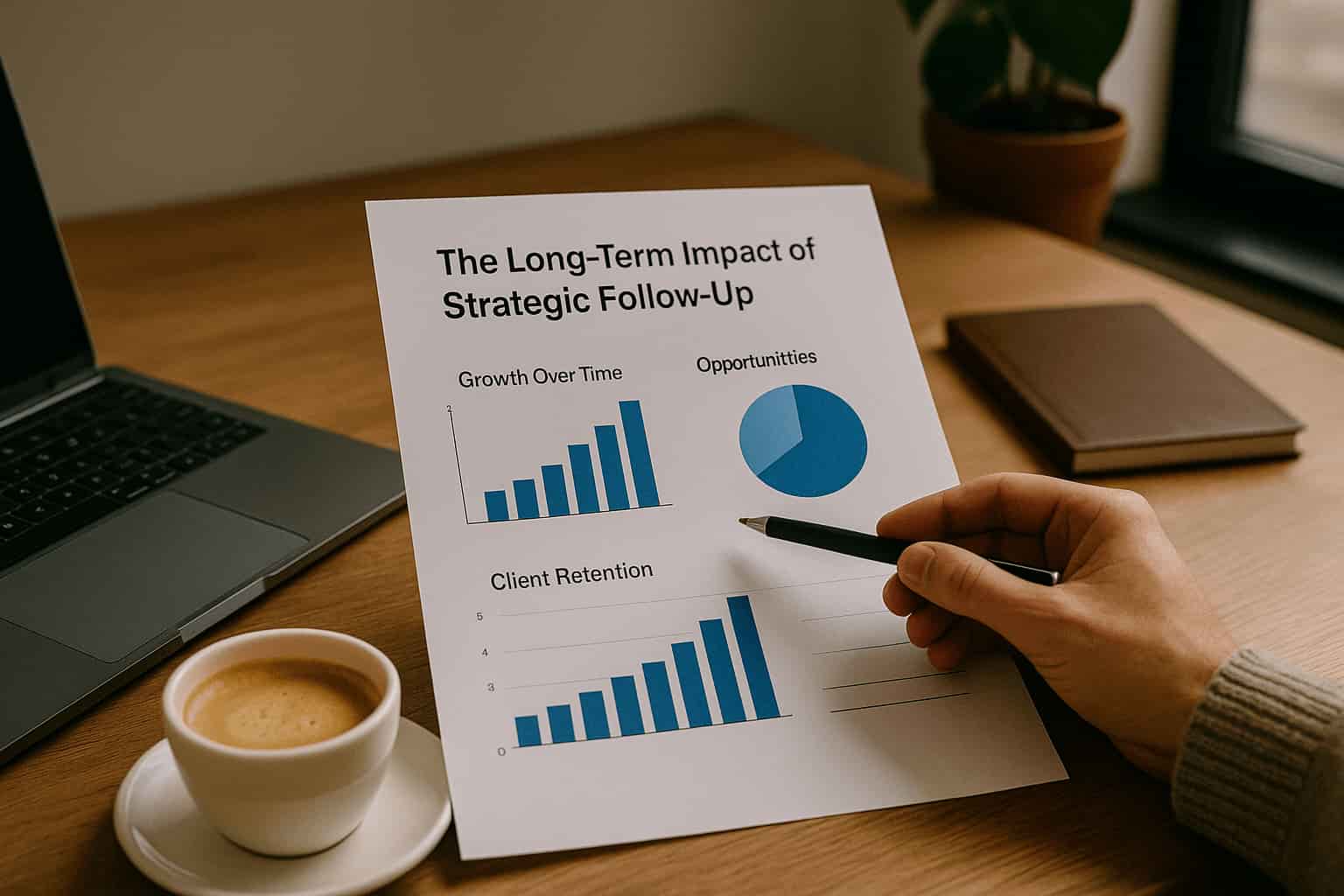
Effective networking follow-up for introverts creates compounding benefits over time. Your investment in relationship building pays dividends throughout your career:
Career Advancement: Strong professional relationships open doors to new opportunities and provide guidance for career decisions.
Professional Support: Your network becomes a source of advice, feedback, and encouragement during challenging times.
Collaboration Opportunities: Meaningful relationships lead to interesting projects and partnerships that advance your professional goals.
Industry Insights: Regular contact with your network keeps you informed about trends, opportunities, and changes in your field.
Personal Fulfillment: Building genuine professional relationships adds meaning and satisfaction to your career journey.
Conclusion: Your Path to Networking Follow-Up Success
Networking follow-up for introverts isn’t about copying extrovert strategies or forcing yourself into uncomfortable situations. It’s about leveraging your natural strengths – thoughtfulness, authenticity, and value-focused communication – to build meaningful professional relationships.
The key is having a system that works with your energy patterns and communication preferences. The 24-48-7 framework provides structure while allowing for personalization. Your professional follow-up strategies should feel natural and sustainable, not forced or overwhelming.
Remember that relationship building is a long-term investment. Your consistent, thoughtful approach to networking relationship maintenance will set you apart from those who rely on superficial connections and aggressive tactics. People remember those who provide value and communicate authentically.
Start with one or two meaningful connections and focus on building those relationships deeply. As you develop confidence and refine your approach, you can gradually expand your network while maintaining the quality and authenticity that makes your follow-up effective.
Ready to master the complete system for authentic networking and relationship building? Discover the comprehensive framework in “Introvert Energy: The Introvert’s Guide to Networking” and turn every networking interaction into a lasting professional relationship. Your thoughtful approach to relationship building can become your greatest career asset.

