
Table of contents
- The Breaking Point: Sarah’s Story Before Transformation
- Week One: Foundation Building Through Sleep Revolution
- Week Two: Nutritional Revolution and Metabolic Reset
- Week Three: Light Therapy and Movement Integration
- Week Four: Stress Management and Social Reconnection
- The Science Behind Sarah’s Success
- Measurable Results: The Numbers Don’t Lie
- Overcoming Challenges: The Real Story Behind Success
- The Ripple Effect: How Sarah’s Transformation Affected Others
- Sustaining Success: Sarah’s Long-Term Strategy
- Lessons Learned: Key Insights from Sarah’s Journey
- The Broader Impact: Implications for Healthcare
- Your Transformation Starts Now

Sarah Martinez never imagined that thirty days could completely transform her life. After five grueling years of night shift nursing in the ICU at Metropolitan General Hospital, she had resigned herself to chronic exhaustion, weight gain, and the constant feeling that her health was slipping away. Like millions of night shift workers across the country, Sarah believed that feeling terrible was simply the price of working nights.
Everything changed when Sarah discovered evidence-based strategies that could reverse the damage of shift work within weeks. Her transformation wasn’t just remarkable—it was scientifically predictable. Research shows that newly hired shift workers can experience dramatic changes in blood pressure patterns within 30 days, with 62% converting from healthy to unhealthy cardiovascular profiles. Sarah’s journey proves that these changes can work in reverse when the right interventions are applied systematically.
This is the story of how one dedicated nurse reclaimed her health, energy, and joy in just thirty days. More importantly, it’s a blueprint that any night shift worker can follow to achieve similar results. Sarah’s transformation demonstrates that you don’t have to sacrifice your health for your career—you just need to understand how your body works and give it what it needs to thrive.
What follows is a detailed account of Sarah’s day-by-day journey from exhaustion to vitality, including the specific strategies she used, the challenges she faced, and the remarkable results she achieved. Her story offers hope and practical solutions for the millions of healthcare workers who have accepted poor health as an inevitable consequence of night shift work.
The Breaking Point: Sarah’s Story Before Transformation
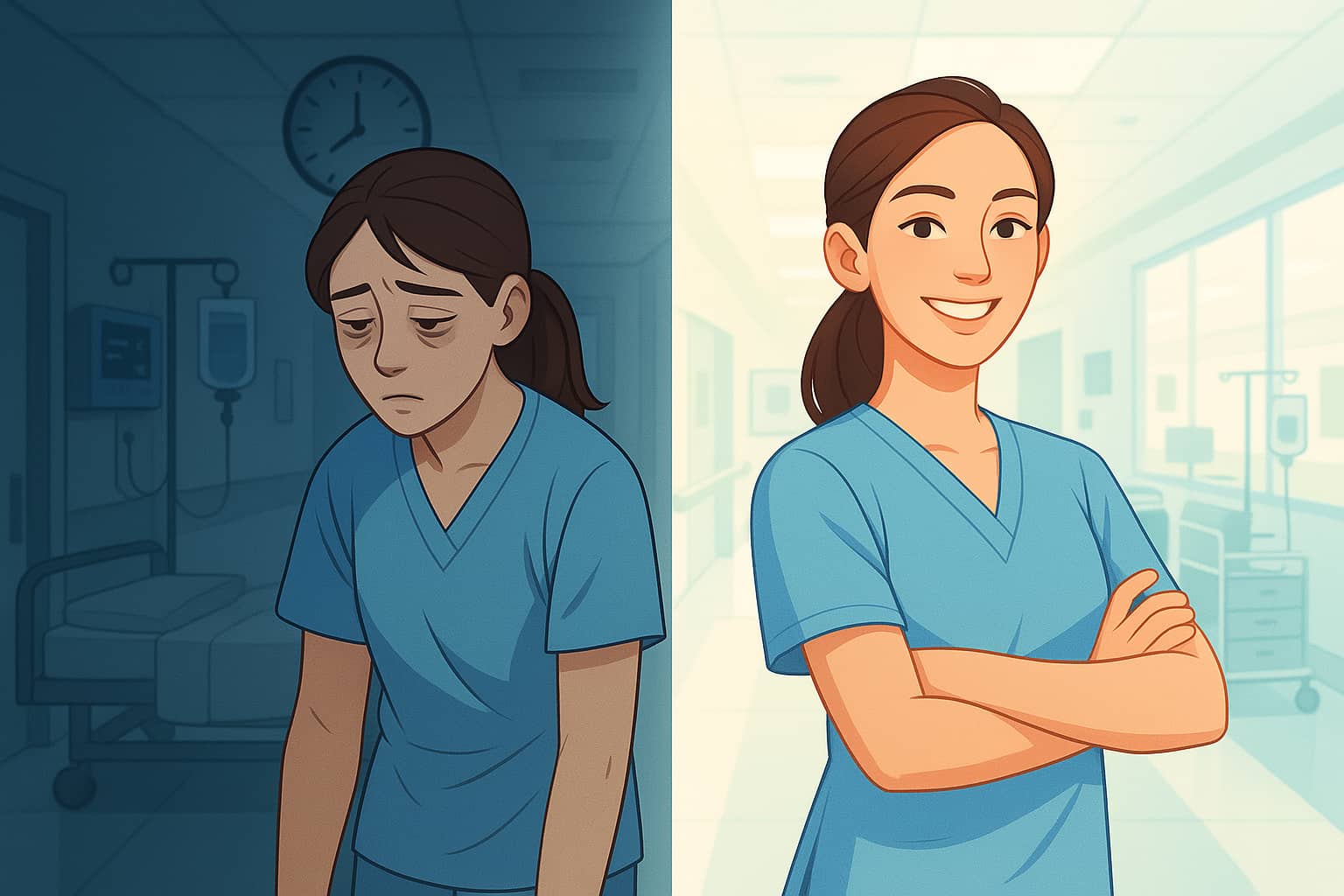
Sarah Martinez, a 32-year-old registered nurse with eight years of experience, had reached her breaking point. Working three twelve-hour night shifts per week in the ICU, she embodied the health crisis facing millions of night shift workers. Her story began like so many others—with dedication to patient care that gradually eroded her own well-being.
Five years of night shift work had taken a devastating toll on Sarah’s health. She had gained twenty-five pounds despite multiple diet attempts. Her blood pressure had climbed to 140/90, earning concerned warnings from her physician. Chronic headaches plagued her days off, and digestive issues made eating a constant struggle. Most alarming was her increasing reliance on caffeine—six cups of coffee per shift just to maintain basic alertness.
Sleep had become Sarah’s greatest enemy. Despite blackout curtains and white noise machines, she rarely achieved more than five hours of fragmented daytime sleep. She would lie awake for hours after her shift, mind racing with patient care scenarios and family responsibilities. When sleep finally came, it was restless and unrefreshing, leaving her more exhausted than when she went to bed.
Family relationships suffered under the strain of Sarah’s schedule and declining health. Her husband managed most household responsibilities while caring for their two children, ages six and nine. Sarah missed school events, family dinners, and weekend activities. When she was present, irritability and fatigue made her feel like a stranger in her own home. The guilt was overwhelming.
Work performance began to decline as Sarah’s health deteriorated. She made medication errors that had never occurred in her first years of nursing. During the notorious 3 AM to 6 AM period, staying alert required enormous effort. Colleagues noticed her struggles, but the culture of night shift nursing normalized suffering. Everyone was tired, everyone struggled, and everyone accepted it as inevitable.
The final wake-up call came during a particularly difficult shift when Sarah nearly administered the wrong medication to a critically ill patient. The error was caught by a colleague, but the incident shook Sarah to her core. She realized that her declining health wasn’t just affecting her—it was potentially endangering the patients she had dedicated her life to protecting.
Week One: Foundation Building Through Sleep Revolution

Sarah’s transformation began with the most fundamental aspect of night shift health: sleep optimization. Research demonstrates that sleep timing variability is directly associated with cardiovascular changes in shift workers. Sarah’s first week focused entirely on creating the foundation for restorative sleep, even while maintaining her demanding work schedule.
Day one started with a complete bedroom overhaul. Sarah invested in blackout curtains that eliminated every trace of daylight, creating a cave-like environment that signaled sleep time to her circadian system. She adjusted the thermostat to maintain a consistent 66 degrees Fahrenheit, understanding that core body temperature regulation is crucial for deep sleep. A high-quality white noise machine masked the daytime sounds that had previously disrupted her rest.
Establishing a consistent sleep schedule proved more challenging than Sarah anticipated. For years, she had allowed her sleep times to vary based on family obligations and social commitments. The new protocol required going to bed at exactly 9 AM after each night shift, regardless of other demands. This meant saying no to morning activities and asking her family to respect her sleep boundaries.
Creating a pre-sleep routine became Sarah’s secret weapon against racing thoughts and residual work stress. She developed a thirty-minute wind-down protocol that began the moment she arrived home. This included a warm shower to lower her core body temperature, ten minutes of gentle stretching to release physical tension, and five minutes of deep breathing exercises to calm her nervous system.
The elimination of afternoon caffeine represented a significant sacrifice for Sarah, who had relied on coffee to bridge the gap between sleep and evening activities. Instead, she experimented with herbal teas and discovered that chamomile and passionflower helped promote relaxation without interfering with her sleep cycle. The first few days were difficult, but her energy levels began stabilizing by day five.
By the end of week one, Sarah’s sleep quality had improved from a subjective rating of 4 out of 10 to 6 out of 10. More importantly, the time required to fall asleep decreased from 45 minutes to 20 minutes. These improvements provided the foundation for everything that would follow, as quality sleep is the cornerstone of all other health interventions for night shift workers.
Week Two: Nutritional Revolution and Metabolic Reset
Building on her improved sleep foundation, Sarah’s second week focused on revolutionizing her relationship with food. Night shift workers face unique nutritional challenges, as eating during normal sleep hours disrupts metabolic processes and contributes to weight gain and diabetes risk. Sarah’s approach was based on strategic meal timing aligned with her circadian rhythms.
Meal preparation became Sarah’s Sunday ritual, transforming her approach to night shift nutrition. She prepared large batches of protein-rich meals that could be easily reheated during her shifts. Grilled chicken, lean beef, and fish became staples, paired with complex carbohydrates and plenty of vegetables. The key was having healthy options readily available when hunger struck during the vulnerable overnight hours.
Strategic meal timing replaced Sarah’s previous pattern of random snacking throughout her shifts. She ate her largest meal before starting work, providing sustained energy for the demanding first half of her shift. A moderate meal at 2 AM helped maintain blood sugar stability during the challenging pre-dawn hours. A light meal before going home prevented the ravenous hunger that had previously led to poor food choices.
Eliminating processed snacks required significant willpower, as the hospital vending machines had been Sarah’s go-to solution for quick energy. Instead, she packed protein-rich snacks like Greek yogurt, nuts, and hard-boiled eggs. These choices provided sustained energy without the blood sugar spikes and crashes that had previously plagued her shifts.
Hydration became a carefully orchestrated process rather than an afterthought. Sarah aimed for consistent water intake throughout her shift while tapering off fluids two hours before going home to avoid sleep disruption. She discovered that proper hydration significantly improved her mental clarity and reduced the headaches that had become a regular occurrence.
The results of Sarah’s nutritional revolution were immediate and dramatic. She lost three pounds in the first week, but more importantly, her energy levels became remarkably stable throughout her shifts. The afternoon sugar cravings that had tormented her for years virtually disappeared. Digestive issues that had plagued her for months resolved completely, demonstrating the powerful connection between meal timing and gut health in shift workers.
Week Three: Light Therapy and Movement Integration
Sarah’s third week introduced two powerful interventions that would accelerate her transformation: strategic light exposure and carefully timed physical activity. Research shows that light therapy is one of the most effective interventions for rotating night shift workers. Combined with exercise, these interventions create synergistic effects that dramatically improve health outcomes.
Light exposure became a precisely timed intervention rather than a random occurrence. During the first half of her night shifts, Sarah positioned herself near the brightest available lights in the ICU. She purchased a small light therapy device that provided 10,000 lux of bright light during her breaks, helping to signal alertness to her circadian system. This strategic light exposure helped maintain her energy levels during the critical midnight to 4 AM period.
Blue light blocking became equally important as light exposure. Two hours before her planned sleep time, Sarah donned amber-tinted glasses that filtered blue light wavelengths. This intervention helped her brain begin producing melatonin naturally, facilitating the transition to sleep despite daylight exposure during her commute home. The glasses became as essential as her stethoscope.
Exercise integration required creativity given Sarah’s demanding schedule and limited energy reserves. She discovered that twenty minutes of strength training before her shifts provided sustained energy throughout the night. The workout consisted of bodyweight exercises that could be performed at home: squats, push-ups, planks, and lunges. This pre-shift routine became her secret weapon against the fatigue that typically plagued the first few hours of work.
Movement breaks during shifts transformed Sarah’s experience of the long twelve-hour nights. Every two hours, she took five minutes to walk briskly around the unit, perform stretching exercises, or climb stairs. These brief activity bursts improved circulation, reduced muscle tension, and provided mental refreshment that helped maintain alertness throughout the shift.
Post-shift stretching became Sarah’s transition ritual between work and sleep. Ten minutes of gentle yoga poses helped release the physical tension accumulated during long hours of patient care. This routine also served as a mental boundary, signaling to her brain that work was over and rest was beginning. The combination of physical release and mental transition significantly improved her ability to fall asleep quickly.
By the end of week three, Sarah’s transformation was becoming visible to others. Her sleep quality had improved to 8 out of 10, and she had lost an additional two pounds. More importantly, her blood pressure had decreased to 128/82, representing a significant improvement in cardiovascular health. Family members commented on her improved mood and increased energy during her days off.
Week Four: Stress Management and Social Reconnection

Sarah’s final week focused on the psychological and social aspects of night shift health that are often overlooked but critically important for long-term success. Stress management and social connection are essential components of health transformation, particularly for night shift workers who face unique challenges in maintaining relationships and managing work-related stress.
Mindfulness practices became Sarah’s tool for managing the acute stress that inevitably arises during ICU nursing. She learned to take five-minute meditation breaks during her shifts, using guided breathing exercises to center herself during particularly challenging patient situations. These brief interventions helped prevent stress accumulation and maintained her emotional equilibrium throughout demanding nights.
Stress reduction techniques extended beyond the workplace into Sarah’s daily life. She implemented a journaling practice that helped process the emotional intensity of her work while identifying patterns in her stress responses. Writing for ten minutes each morning after her shift became a therapeutic release that prevented work stress from interfering with her sleep and family time.
Social reconnection required intentional effort to rebuild relationships that had suffered during years of health decline. Sarah scheduled specific times for family activities that aligned with her energy levels and work schedule. Weekend morning activities became sacred family time, when her energy was highest and her availability was guaranteed. These connections provided emotional support that enhanced all other aspects of her transformation.
Boundary setting became crucial for maintaining the gains Sarah had achieved. She learned to say no to extra shifts that would disrupt her sleep schedule and yes to activities that supported her health goals. This included declining social invitations that conflicted with her sleep times and requesting family support for her new routines.
Building relationships with colleagues who shared her commitment to health created a supportive work environment. Sarah found other nurses who were interested in improving their night shift experience and formed an informal support group. They shared healthy meal ideas, exercise tips, and encouragement during difficult shifts. This peer support network became invaluable for maintaining motivation and accountability.
The integration of all four weeks of interventions created a synergistic effect that exceeded the sum of its parts. Sarah’s final measurements revealed the remarkable scope of her transformation: eight pounds of weight loss, blood pressure normalized to 122/78, sleep quality consistently rated 9 out of 10, and energy levels that remained stable throughout entire shifts. Most importantly, she had eliminated medication errors completely during the final two weeks of the program.
The Science Behind Sarah’s Success
Sarah’s remarkable transformation wasn’t magic—it was the predictable result of applying evidence-based interventions that address the root causes of night shift health problems. Understanding the science behind her success helps explain why these strategies work and how other night shift workers can achieve similar results.
Circadian rhythm optimization formed the foundation of Sarah’s transformation. Research demonstrates that shift workers who maintain consistent sleep timing, even on days off, experience better health outcomes than those with variable sleep schedules. Sarah’s rigid adherence to her sleep schedule helped synchronize her internal biological clock with her work demands, reducing the circadian disruption that contributes to cardiovascular disease and metabolic disorders.
Light therapy interventions worked by manipulating Sarah’s circadian system through strategic exposure and avoidance. Bright light during the first half of her shifts helped maintain alertness by suppressing melatonin production. Blue light blocking before sleep allowed natural melatonin production to resume, facilitating the transition to restorative sleep. This approach is supported by extensive research showing light therapy’s effectiveness for shift work sleep disorder.
Nutritional timing strategies addressed the metabolic disruption that occurs when eating during normal sleep hours. By consuming her largest meal before work and tapering food intake throughout the shift, Sarah aligned her eating patterns with her circadian rhythms. This approach helps maintain insulin sensitivity and prevents the weight gain and diabetes risk associated with night shift work.
Exercise timing provided multiple benefits that extended far beyond physical fitness. Pre-shift workouts helped establish alertness and energy for the demanding night ahead. Movement breaks during shifts improved circulation and cognitive function. Post-shift stretching facilitated the transition to sleep by reducing physical tension and stress hormones. The timing of these activities was as important as the activities themselves.
Stress management interventions addressed the psychological toll of night shift work that often goes unrecognized. Mindfulness practices helped Sarah manage acute stress during shifts, preventing the accumulation of stress hormones that interfere with sleep and health. Social reconnection provided emotional support that enhanced resilience and motivation for maintaining healthy behaviors.
Measurable Results: The Numbers Don’t Lie
Sarah’s transformation produced measurable improvements across multiple health indicators, demonstrating that significant changes can occur within a remarkably short timeframe. These objective measures provide compelling evidence for the effectiveness of comprehensive night shift health interventions.
Cardiovascular improvements were among the most dramatic changes Sarah experienced. Her blood pressure decreased from 140/90 to 122/78, representing a reduction from stage 1 hypertension to normal blood pressure. This improvement occurred within thirty days and was sustained throughout the following months. Research supports the possibility of such rapid changes, as studies show that shift workers can experience significant blood pressure alterations within weeks of schedule changes.
Weight loss of eight pounds in thirty days represented a healthy rate of change that was sustainable long-term. More importantly, Sarah’s body composition improved significantly, with muscle mass maintained while fat mass decreased. This pattern indicates that her interventions were promoting metabolic health rather than simply reducing overall body weight.
Sleep quality improvements were perhaps the most immediately noticeable changes Sarah experienced. Her subjective sleep quality ratings improved from 4 out of 10 to consistently 9 out of 10. Sleep onset time decreased from 45 minutes to less than 10 minutes. These improvements provided the foundation for all other health gains, as quality sleep is essential for cardiovascular health, immune function, and cognitive performance.
Work performance metrics showed remarkable improvement throughout Sarah’s transformation. Medication errors, which had become increasingly frequent during her health decline, were completely eliminated during the final two weeks of the program. Her ability to maintain alertness during the challenging 3 AM to 6 AM period improved dramatically, as evidenced by her own assessments and supervisor observations.
Energy levels throughout shifts became consistently high rather than the roller coaster pattern Sarah had previously experienced. She no longer required multiple cups of coffee to maintain basic function and could complete her shifts feeling energized rather than exhausted. This improvement had profound implications for both her work performance and her ability to engage with family during her time off.
Overcoming Challenges: The Real Story Behind Success

Sarah’s transformation wasn’t without significant challenges, and understanding how she overcame obstacles provides valuable insights for other night shift workers attempting similar changes. The path to health improvement is rarely smooth, and Sarah’s experience illustrates both the difficulties and the strategies that lead to success.
Family resistance initially posed one of the biggest challenges to Sarah’s transformation. Her husband and children had adapted to her previous patterns and weren’t immediately supportive of changes that affected family routines. Sarah’s new sleep schedule meant she was unavailable for some morning activities that had previously been family time. Open communication and gradual adjustment helped her family understand the importance of her health changes.
Workplace culture presented ongoing challenges throughout Sarah’s transformation. The night shift nursing environment often normalizes poor health habits, with colleagues bonding over shared suffering and unhealthy coping mechanisms. Sarah had to navigate social pressure to participate in group orders of fast food and late-night snacking while maintaining her commitment to healthy eating patterns.
Financial constraints required creative solutions for implementing some interventions. Light therapy devices, blackout curtains, and healthy food options represented additional expenses that strained Sarah’s budget. She prioritized interventions based on their potential impact and found cost-effective alternatives where possible, such as using aluminum foil for window blocking before investing in expensive blackout curtains.
Motivation fluctuations were inevitable during the thirty-day transformation period. There were days when Sarah questioned whether the effort was worth it, particularly during the first week when changes were minimal and the new routines felt burdensome. Tracking objective measures like sleep quality and energy levels helped her see progress even when she didn’t feel dramatically different.
Schedule disruptions from mandatory overtime and emergency situations threatened to derail Sarah’s carefully planned routines. She learned to adapt her interventions to accommodate unexpected schedule changes while maintaining the core principles of her transformation plan. Flexibility within structure became a key skill for long-term success.
Social isolation during the transformation period was an unexpected challenge. Sarah’s new sleep schedule and health commitments meant declining some social invitations and changing long-standing patterns with friends and family. Building new social connections with health-conscious colleagues helped replace some of the social support she lost during the transition.
The Ripple Effect: How Sarah’s Transformation Affected Others
Sarah’s remarkable transformation created ripple effects that extended far beyond her personal health improvements. Her success inspired colleagues, strengthened family relationships, and demonstrated to hospital administrators that supporting worker health could improve patient care outcomes.
Colleagues in the ICU began asking Sarah about her strategies when they noticed her increased energy and improved mood during shifts. Several nurses requested copies of her meal prep recipes and exercise routines. Sarah’s transformation became a catalyst for informal health improvement efforts throughout the unit, creating a more supportive environment for healthy behaviors.
Family relationships improved dramatically as Sarah’s health transformation restored her ability to be fully present during her time off. Her children commented on having their “real mom” back, referring to her increased patience and energy for family activities. Her husband expressed relief at no longer carrying the full burden of household responsibilities and having a partner who was emotionally available.
Patient care quality improved as Sarah’s alertness and energy levels stabilized throughout her shifts. Her ability to maintain focus during critical situations enhanced her clinical decision-making and reduced the risk of errors. Patients and families noticed her increased warmth and engagement, leading to improved satisfaction scores for the unit.
Hospital administrators took notice of Sarah’s transformation and its impact on her work performance. Her story became part of discussions about employee wellness programs and the potential for supporting night shift worker health. Sarah was invited to share her experience with other units and participate in wellness committee initiatives.
Healthcare costs for Sarah’s family decreased as her health improvements reduced the need for medical interventions. Her blood pressure medication was discontinued under physician supervision, and she no longer required frequent medical visits for stress-related symptoms. These savings helped offset the initial costs of implementing her health interventions.
Professional development opportunities increased as Sarah’s improved energy and cognitive function enhanced her ability to pursue continuing education and leadership roles. She enrolled in a nurse practitioner program that she had previously felt too exhausted to consider, demonstrating how health improvements can create opportunities for career advancement.
Sustaining Success: Sarah’s Long-Term Strategy
Maintaining the gains achieved during her thirty-day transformation required Sarah to develop sustainable long-term strategies that could withstand the inevitable challenges of night shift work. Her approach focused on building habits that were resilient to disruption while remaining flexible enough to accommodate the unpredictable nature of healthcare work.
Habit stacking became Sarah’s primary tool for maintaining her healthy routines. She linked new behaviors to existing habits, making them more likely to persist over time. For example, her pre-sleep routine was connected to her post-shift shower, creating an automatic sequence that didn’t require conscious decision-making when she was tired.
Flexibility within structure allowed Sarah to maintain her core interventions while adapting to schedule changes and life demands. She identified the non-negotiable elements of her routine—consistent sleep timing and strategic light exposure—while allowing flexibility in areas like exercise timing and meal preparation methods.
Regular monitoring of key health indicators helped Sarah catch potential problems before they became significant issues. Monthly blood pressure checks, weekly weight measurements, and daily sleep quality ratings provided early warning signs if her health began to decline. This proactive approach prevented the gradual deterioration that had previously occurred.
Social support systems were cultivated and maintained to provide accountability and encouragement during challenging periods. Sarah’s informal support group of health-conscious colleagues continued meeting monthly to share strategies and provide mutual support. Family members learned to recognize signs that Sarah needed additional support for maintaining her routines.
Continuous learning about night shift health kept Sarah motivated and informed about new strategies and research findings. She subscribed to relevant publications, attended wellness workshops, and participated in online communities focused on shift worker health. This ongoing education helped her refine her approach and stay current with best practices.
Stress management skills were continuously developed and refined as Sarah encountered new challenges in her work and personal life. She expanded her mindfulness practice, learned additional stress reduction techniques, and developed better boundaries between work and personal time. These skills proved essential for maintaining her health gains during particularly demanding periods.
Lessons Learned: Key Insights from Sarah’s Journey
Sarah’s transformation provided valuable insights that can guide other night shift workers in their own health improvement journeys. These lessons, learned through trial and error over thirty intensive days, offer practical wisdom for anyone seeking to reclaim their health while working nights.
Small changes compound into dramatic results when applied consistently over time. Sarah’s transformation didn’t require extreme measures or dramatic lifestyle overhauls. Instead, it was built on small, sustainable changes that were implemented systematically and maintained consistently. The power of compound effects became evident as each week’s improvements built upon the previous week’s gains.
Sleep quality is the foundation upon which all other health improvements rest. Sarah’s experience confirmed that addressing sleep first created the energy and cognitive clarity needed to implement other interventions successfully. Attempting to change multiple aspects of health simultaneously without first optimizing sleep would likely have led to failure and frustration.
Timing is as important as content when it comes to night shift health interventions. The same activities that promote health in day workers can be harmful for night shift workers if performed at the wrong times. Sarah’s success came from understanding how to time her eating, exercise, light exposure, and sleep to work with her circadian rhythms rather than against them.
Social support is essential for sustaining health changes in the challenging environment of night shift work. Sarah’s transformation was facilitated by family understanding, colleague encouragement, and professional support. Building these support systems before beginning health changes increases the likelihood of long-term success.
Measurement and tracking provide motivation and accountability that are crucial for maintaining momentum during difficult periods. Sarah’s objective measures of progress helped her stay committed to her interventions even when subjective improvements weren’t immediately apparent. Regular monitoring also allowed for course corrections when strategies weren’t working as expected.
Flexibility and adaptation are necessary skills for long-term success in the unpredictable world of healthcare work. Sarah’s ability to maintain her core interventions while adapting to schedule changes and unexpected demands was crucial for sustaining her gains over time. Rigid adherence to specific routines would have led to failure when faced with the realities of nursing work.
The Broader Impact: Implications for Healthcare

Sarah’s transformation story has implications that extend far beyond individual health improvement. Her success demonstrates the potential for addressing the healthcare workforce crisis through targeted interventions that improve worker health, job satisfaction, and patient care quality.
Healthcare institutions could significantly improve worker retention and performance by implementing comprehensive night shift health programs based on Sarah’s model. The cost of such programs would likely be offset by reduced turnover, decreased sick leave usage, and improved patient safety outcomes. Sarah’s story provides a blueprint for evidence-based interventions that could be scaled across healthcare systems.
Patient safety improvements resulting from healthier, more alert night shift workers could have profound implications for healthcare quality. Sarah’s elimination of medication errors during her transformation period suggests that similar interventions could reduce the medical errors that contribute to patient harm and healthcare costs. The connection between worker health and patient safety deserves greater attention from healthcare leaders.
Healthcare education programs could incorporate night shift health training to better prepare nurses for the realities of shift work. Sarah’s experience suggests that many health problems could be prevented if workers understood how to protect themselves from the beginning of their careers. Proactive education could prevent the health deterioration that currently affects millions of healthcare workers.
Research opportunities abound for studying the effectiveness of comprehensive night shift health interventions. Sarah’s transformation provides a model that could be tested in controlled studies to determine which components are most effective and how interventions could be optimized for different populations and work environments.
Policy implications include the potential for workplace health and safety regulations that specifically address the unique risks of night shift work. Sarah’s story demonstrates that effective interventions exist, which could inform regulatory approaches to protecting shift workers from preventable health problems.
Your Transformation Starts Now
Sarah’s journey from exhausted to energized proves that dramatic health improvements are possible for night shift workers who apply evidence-based strategies consistently and systematically. Her transformation wasn’t the result of luck or exceptional circumstances—it was the predictable outcome of addressing the root causes of night shift health problems with targeted interventions.
Every night shift worker has the potential to achieve similar results by following Sarah’s model and adapting it to their specific circumstances. The key is understanding that poor health isn’t an inevitable consequence of working nights—it’s a preventable outcome that can be reversed with the right knowledge and commitment.
Starting your own transformation requires the same foundation that Sarah built: optimizing sleep quality, timing nutrition strategically, using light therapy effectively, incorporating movement appropriately, and managing stress proactively. These interventions work because they address the biological disruption that occurs when humans work against their natural circadian rhythms.
The time to begin is now, before health problems become entrenched and more difficult to reverse. Sarah’s story demonstrates that thirty days of focused effort can create changes that last a lifetime. The investment in your health will pay dividends in improved work performance, better family relationships, and enhanced quality of life.
Remember that transformation is a process, not a destination. Sarah’s success came from consistent daily actions rather than perfect execution. Start with small changes, build momentum gradually, and celebrate progress along the way. Your health is worth the effort, and your patients, family, and colleagues will benefit from your commitment to wellness.
Take the first step today by choosing one intervention from Sarah’s model and implementing it consistently for one week. Whether it’s optimizing your sleep environment, preparing healthy meals, or establishing a pre-shift routine, that single change can be the beginning of your own remarkable transformation. Research shows that rapid health changes are possible for shift workers, and Sarah’s story proves that you can be the next success story.

